


Platform & Therapeutics
Anticancer Therapeutic Strategy Chronic Inflammation Therapeutic Strategy
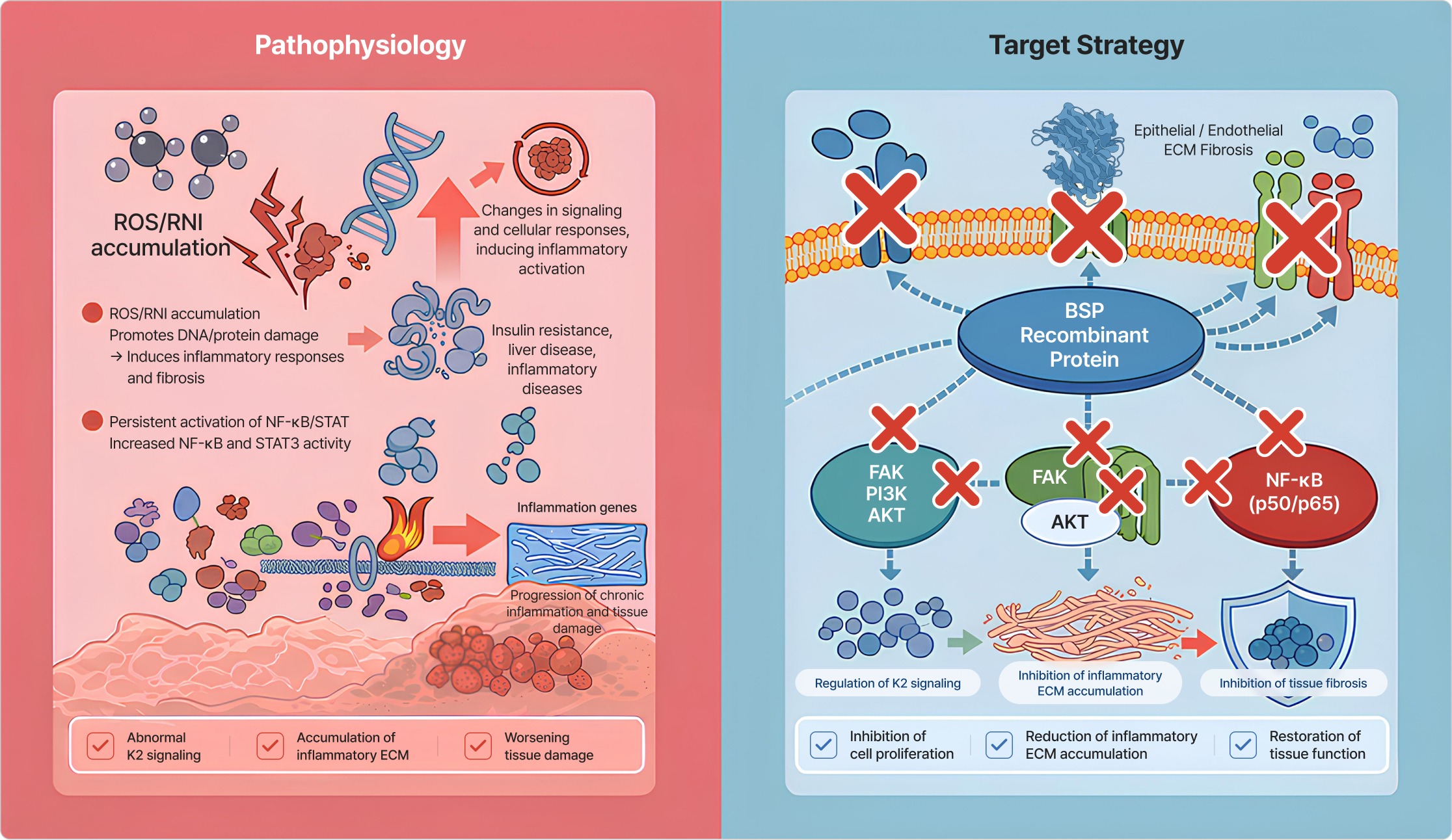
Chronic inflammation develops and becomes persistent through recurring common circuits in which cytokine persistence (TNF-α/IL-1β/IL-6), transcriptional hubs (NF-κB/STAT3), immune-cell infiltration (ICAM/VCAM), ROS/RNI damage, and ECM/fibrotic remodeling amplify one another. The BSP pipeline is designed to precisely regulate the ECM–integrin (αVβ3/αVβ6)–FAK signaling axis, an upstream node of this common circuit, with the aim of alleviating and blocking chronicity, recurrence, and fibrotic progression at an early stage.
01
Common Pathophysiology
Persistent inflammatory cytokines
(TNF-α, IL-1β, IL-6, etc.)
02
Common Pathophysiology
ROS/RNI
accumulation
→ Increased
potential for
DNA/protein damage
and mutation
03
Common Pathophysiology
Activation of transcriptional hubs
(NF-κB, STAT3, etc.)
→ Maintenance of inflammatory gene programs
04
Common Pathophysiology
Immune-cell recruitment and infiltration
(ICAM-1/VCAM-1)
→ Amplification of inflammation
05
Common Pathophysiology
ECM/fibrotic remodeling
→ Chronicity, recurrence, and impaired organ function
1
Mechanism-based targeting: Define chronic
inflammation as an amplifying circuit of epithelium/endothelium–immunity–
ECM–fibrosis and target its key bottlenecks
2 Early interception: Mitigates and blocks the process before persistent TNF-α/IL-1β/IL-6 production and ROS/RNI damage accumulation become established
3 Precise regulation of upstream nodes: selectively regulate integrin–FAK–transcriptional hubs (including NF-κB) and ICAM/VCAM infiltration gates to secure safety
4 Simultaneous control of inflammation + remodeling: Reduce fibrosis and ECM accumulation together, while expanding indications through biomarker-based subtype selection
Infection-driven chronic inflammation
Autoimmune/Immune-mediated chronic inflammation
Metabolic/Lifestyle-related chronic inflammation (including low-grade inflammation)
Vascular/atherosclerosis axis (cerebral and cardiovascular diseases)
Fibrosis-centered chronic inflammation (accompanied by inflammation-remodeling)
Overview Through the BSP™ platform, we design and manufacture recombinant proteins that selectively regulate upstream signaling pathways commonly activated in chronic inflammatory diseases as well as disease-specific downstream responses that diverge by indication.
Outstanding Efficacy Through selective regulation of upstream and downstream signaling, we mitigate the amplification of inflammation-triggering factors and achieve stable anti-inflammatory responses. Upstream inhibitory mechanism designed to minimize adverse effects: By intervening precisely at the early inflammatory signaling stage, it minimizes nonspecific immune suppression and improves the potential for long-term application.
Highly Disease-Expandable Platform This platform can tune binding characteristics and intensity of action according to the upstream and downstream signaling features of each disease.